

Build an internal app: a one-page app that sends a message to a workflow, shared with a password and used from its link (1:22).
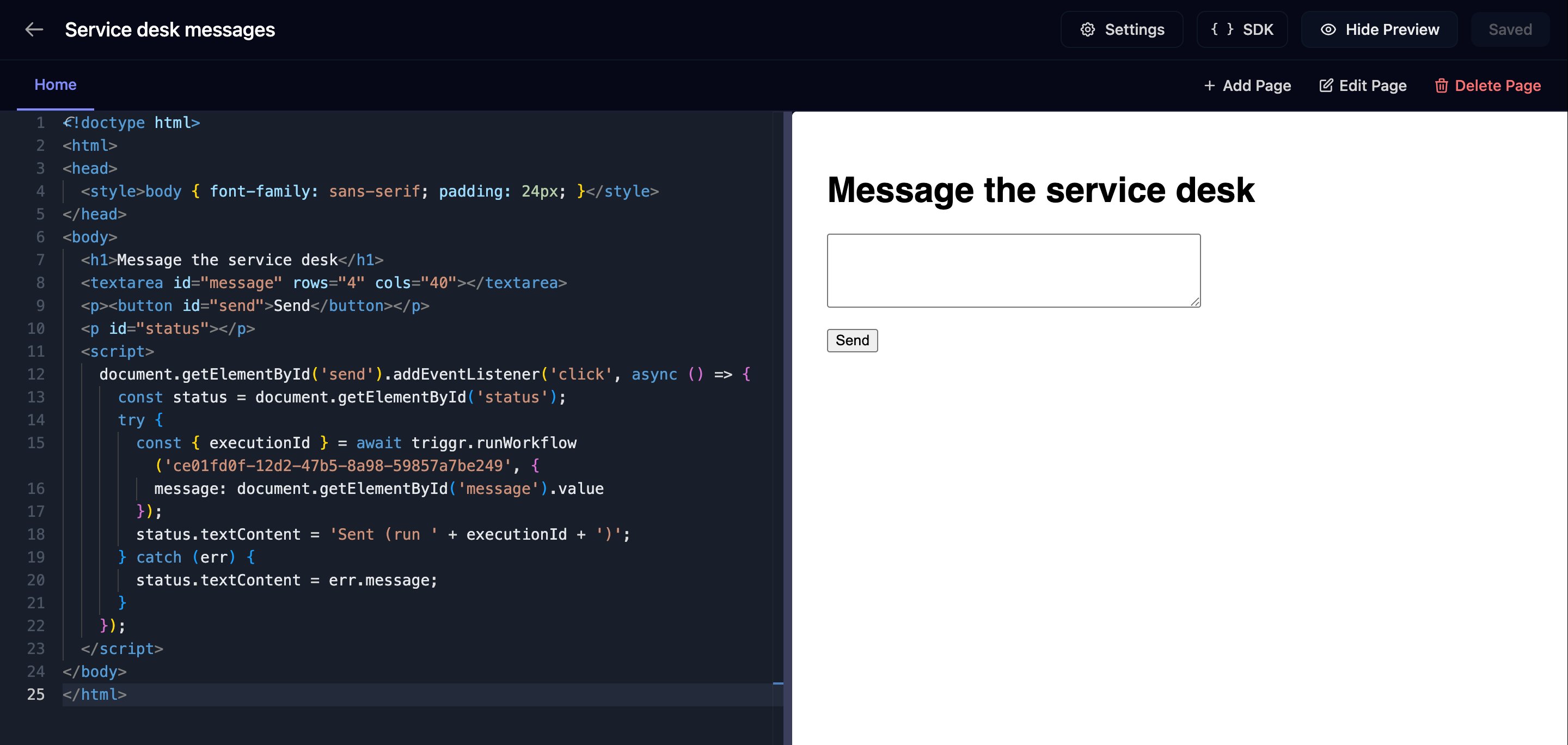
The app editor: pages along the top, HTML on the left, a live preview on the right.
Build your first app
A one-page app your team uses to send a message to a workflow. You need an active workflow with a step that uses{{ ctx.params.message }}; copy its ID from the address bar (app.triggr-app.com/workflows/<id>/design).
1
Create the app
In Internal Apps, click New App, enter a Name and click Create App.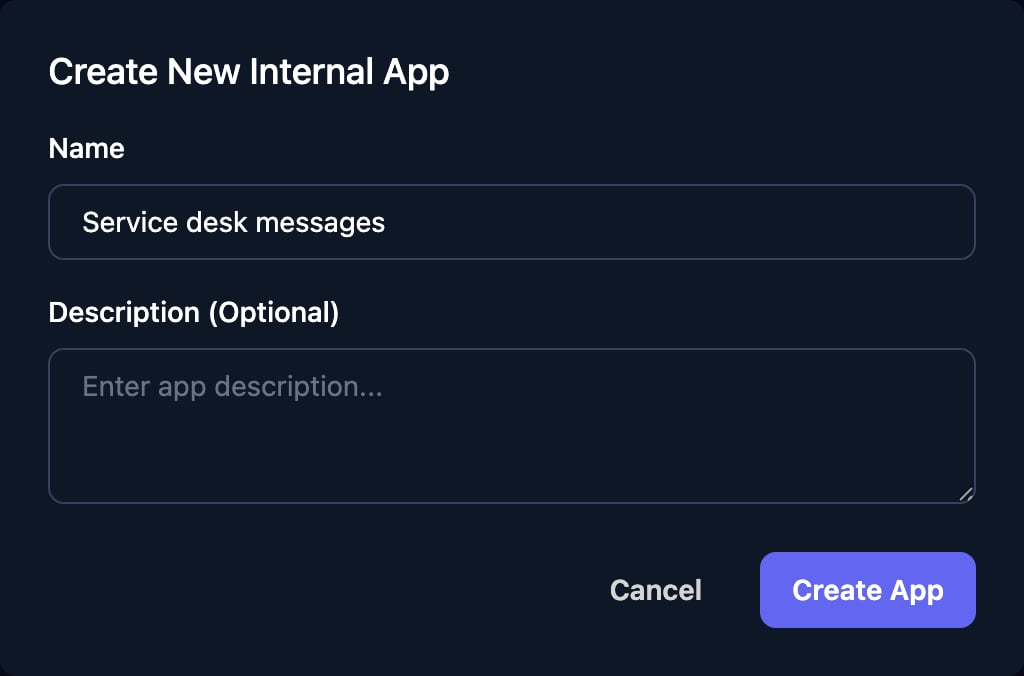
2
Write the page
Click Design on the app’s row, click Add Page, name the page and click Create Page. Paste this into the editor, replace
WORKFLOW_ID with your workflow’s ID and click Save.3
Secure it
Click Settings, choose Password as the Authentication Type and enter a password. Under Workflows pages can run, tick your workflow, then click Save Settings.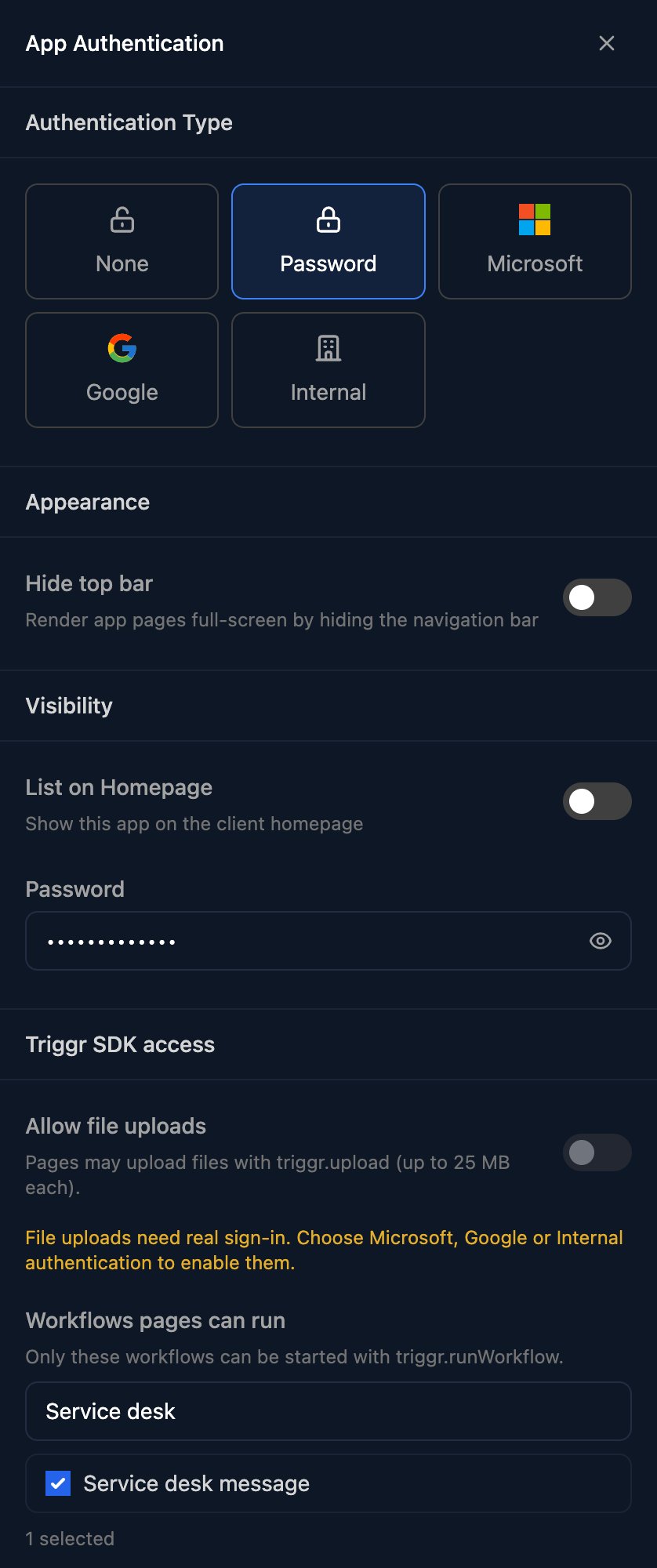
4
Test and share it
Back on Internal Apps, click Share on the app’s row, then Open in new tab. Enter the password and send a message: the run appears under Executions. Click Copy and send your team the link and password.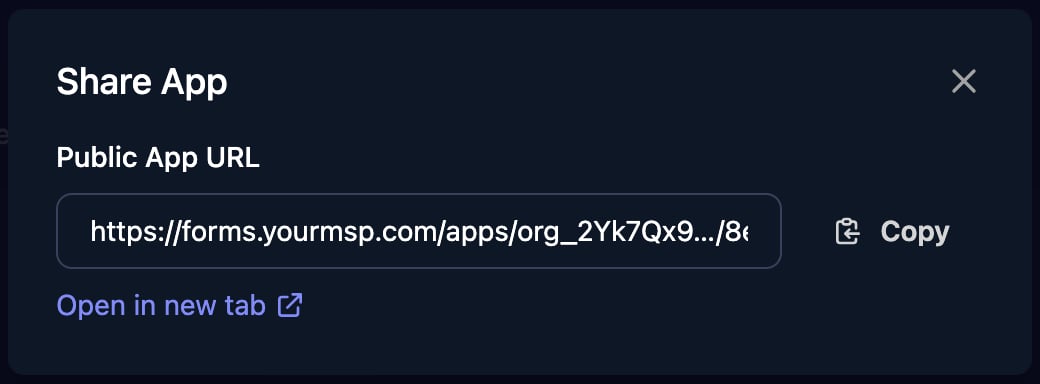
Who can open an app
New apps start as Internal: your Studio team opens them athttps://app.triggr-app.com/telescope/apps/<org-id>/<app-id> with their staff sign-in (Support > Copy Org ID in the top bar gives the first ID; the second is in the designer’s address bar). None, Password, Microsoft and Google work as they do for forms and add a Share link. A Microsoft or Google visitor’s workflows run for their client.
Allow file uploads needs Microsoft, Google or Internal authentication. Hide top bar shows only the first page, full-screen.
The Triggr SDK
In the live app (the Share link, or the Internal app URL above), each page getswindow.triggr, which acts as the signed-in visitor: runWorkflow starts a ticked workflow and returns its executionId, and upload, pickAndUpload, list and fileUrl handle files when Allow file uploads is on. Preview and Open show a page’s layout, not its calls, so test calls in the live app. Click SDK in the editor for the quick reference.
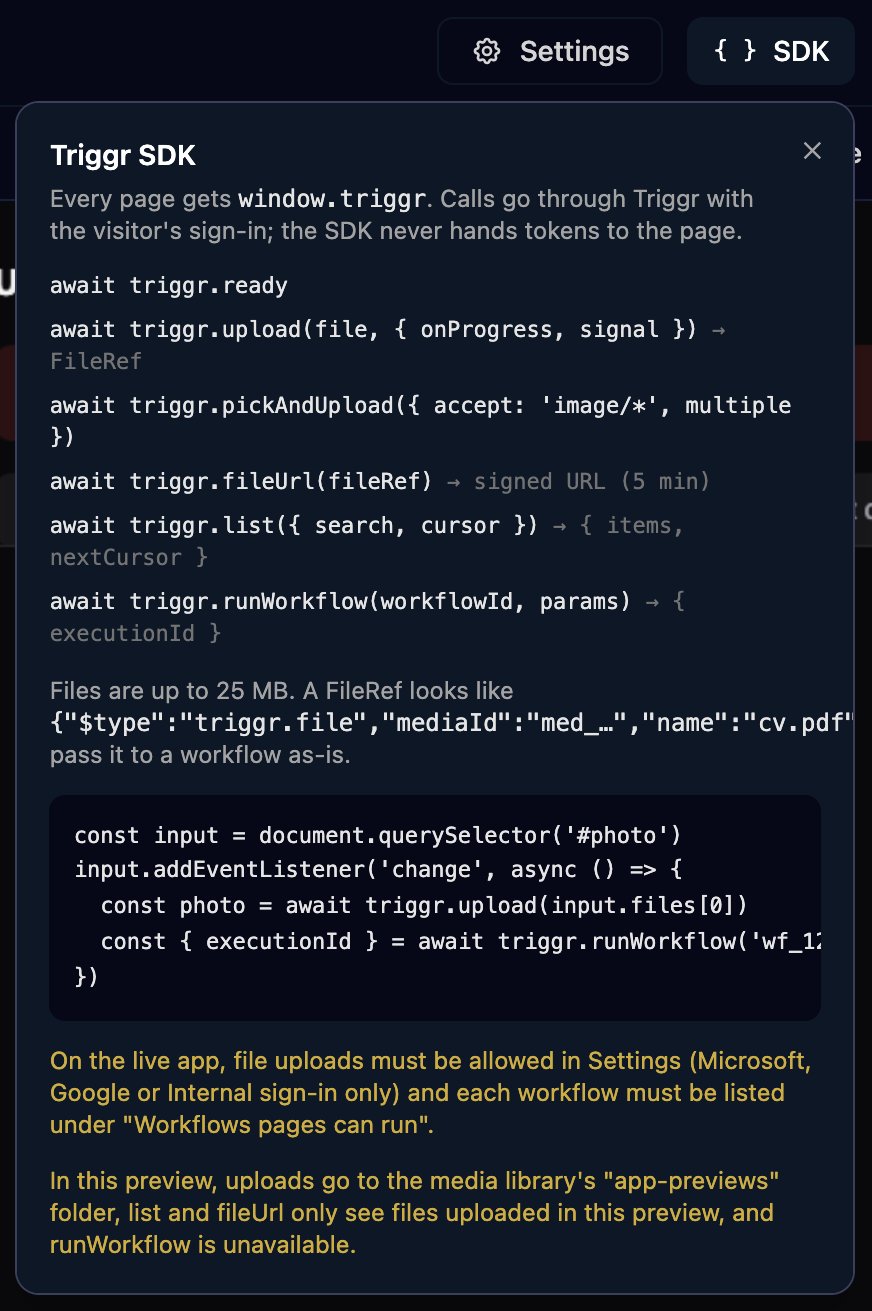
- SDK reference: every call, its limits and errors, and when to use a workflow’s webhook instead.
- Example: build an uptime monitor: workflows on a schedule, results in a database, and a page that shows them.
Troubleshooting
this app is not allowed to run that workflow
this app is not allowed to run that workflow
Tick the workflow under Settings > Workflows pages can run and click Save Settings, and check the ID in the page matches the workflow’s.
workflow is not active
workflow is not active
On Workflows, click Edit on the workflow’s row, set Status to Active and click Save Changes.
“triggr is not defined” or “Triggr is not available on this page”
“triggr is not defined” or “Triggr is not available on this page”
The page was opened with Open, which shows it without the SDK. Use Share > Open in new tab, or the Internal app URL above.
New App is missing
New App is missing
Ask an admin for permission to edit internal apps.