

Set up SentinelOne
Create a service user for Triggr. SentinelOne’s guide is in your console’s built-in help: add/docs/en/creating-service-users.html to your console URL.
1
Start a service user
In the scope selector, select the account or site Triggr should work with. Go to Settings > Users > Service Users (in newer consoles, Policy & Settings > User Management > Service Users) and click Actions > Create New Service User.
2
Name it and set the expiry
Set Name to
Triggr and choose the longest Expiration Date your policy allows; you can’t change either later. Click Next.3
Choose access and role
Set Access Level to Account for every site, or Site for the sites you select. Choose Viewer to only read data, or Admin (or a custom role that allows them) to scan, disconnect, reconnect, reboot or uninstall agents and retrieve uninstall passphrases. Click Create User.
4
Copy the API token
Copy the token before you click Close. SentinelOne shows it only once.
Connect it in Triggr
1
Open the configuration
Go to Integrations > SentinelOne and click Configure on the Base Configuration card.
2
Enter the token and console
Paste the token into API Token, without an 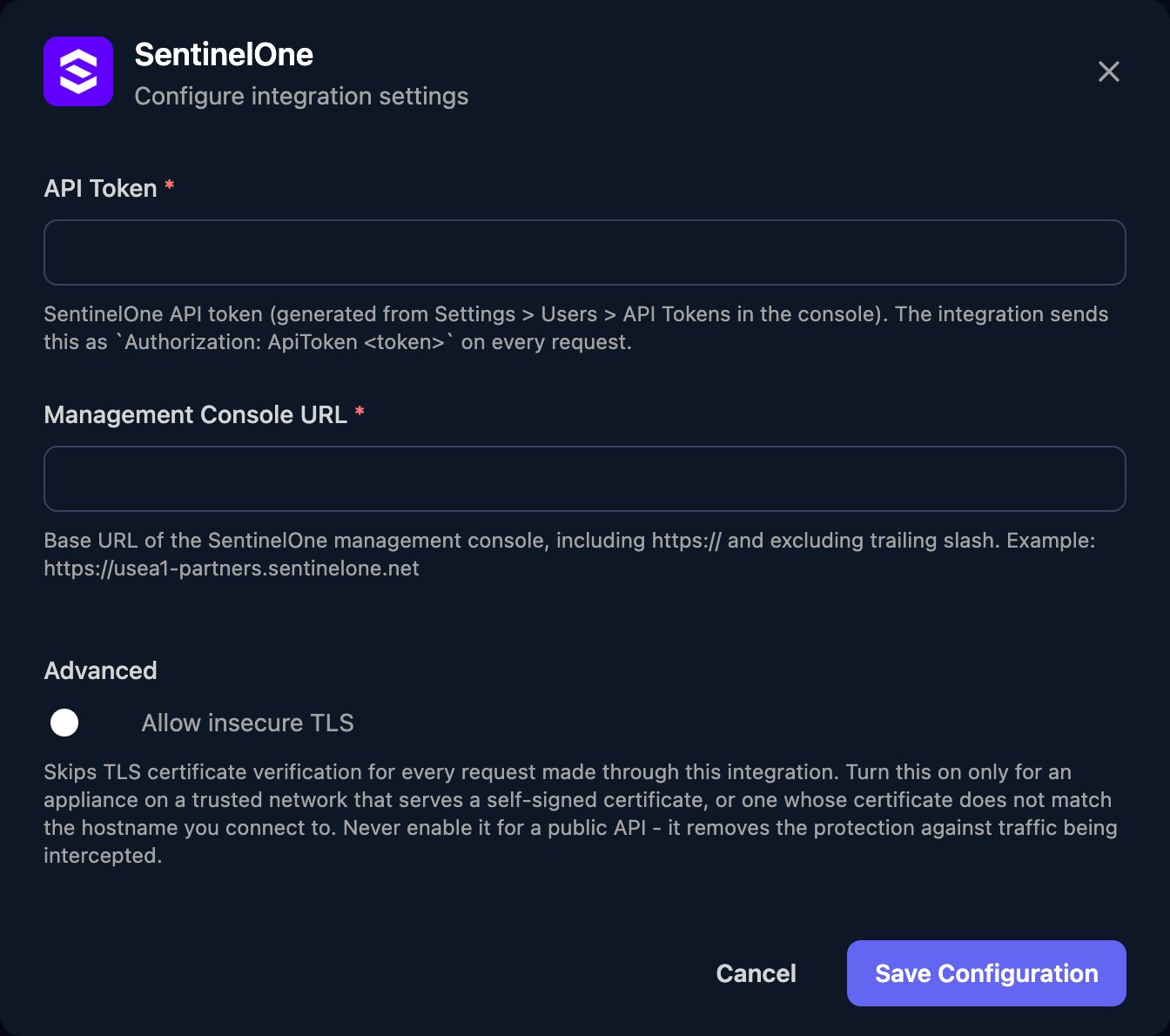
ApiToken prefix. Enter your Management Console URL with https:// and nothing after the host name, such as https://usea1-partners.sentinelone.net, and click Save Configuration.Map your clients
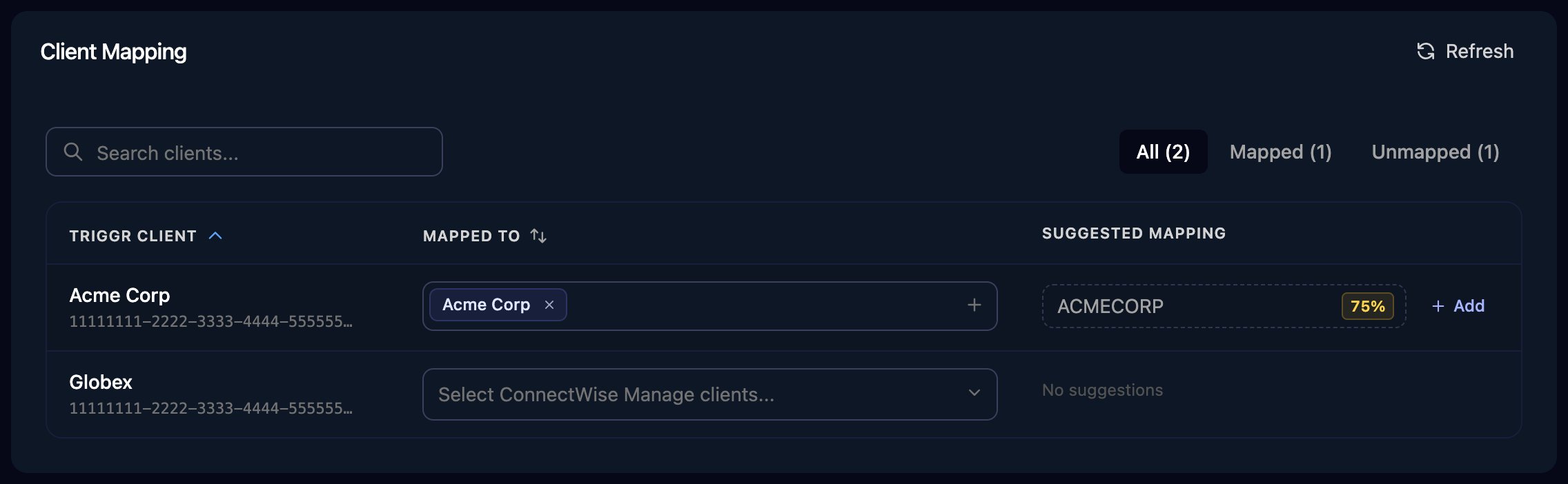
The Client Mapping card lists those sites. Click Apply 100% Matches, then choose the site in Mapped to for any client left. Triggr saves each match as the client’ssentinelOneSiteId variable (and its account as sentinelOneAccountId), for actions’ siteIds and accountIds inputs.
Renew the API token
Every action fails once the token expires. Before then, select theTriggr service user and click Actions > Copy User to create a replacement with a new expiry (or Actions > Regenerate API Token, which stops the old token straight away). Then click Edit on the Base Configuration card and paste the new token.

Troubleshooting
Every action fails with 401
Every action fails with 401
Check the service user still exists, its token hasn’t expired or been regenerated, and you pasted only the token. If in doubt, renew the token.
Not-found or connection errors
Not-found or connection errors
Management Console URL must start with
https:// and have no trailing / or path such as /dashboard.Read actions work but endpoint actions fail (403)
Read actions work but endpoint actions fail (403)
A Viewer can’t act on endpoints. Create a service user with Admin or a suitable custom role and paste its token.
Sites are missing from Client Mapping, or agents and threats are missing
Sites are missing from Client Mapping, or agents and threats are missing
Triggr only sees the service user’s scope. Create one with Account access, or access to the missing sites, replace the token, then click Refresh on Client Mapping.