

Set up Duo
Repeat these steps in each Duo account whose users Triggr should verify: your own, and each client’s.1
Add an Auth API application
In the Duo Admin Panel, go to Applications → Application Catalog, find Auth API (labelled 2FA) and click + Add.
2
Name it and grant user access
Give it a name users will recognise in Duo Push requests, such as your service desk’s. Set User access to all users or the groups Triggr should verify, then click Save. If its New User policy denies access, enrolment returns a deny response instead of a link.
3
Copy the application details
Copy the Integration key, Secret key and API hostname from Details.
Connect it in Triggr
1
Open the account's configuration
Go to Integrations > Duo Auth and click Configure on the client’s row in the Per-Client Configuration card, or on the Base Configuration card for your own account.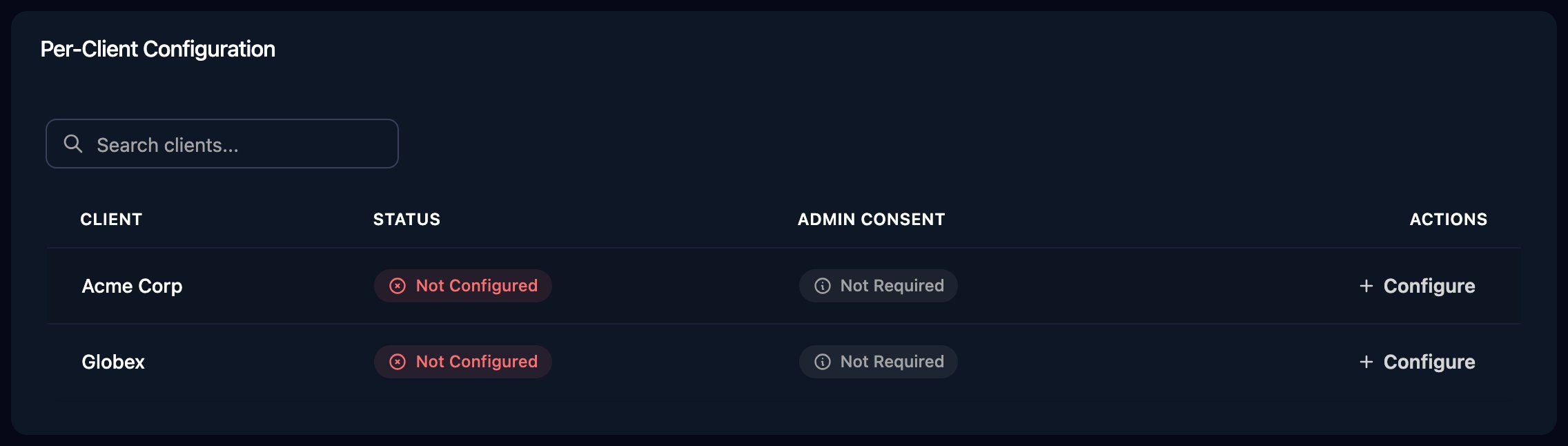
2
Enter the application details
Enter Hostname as 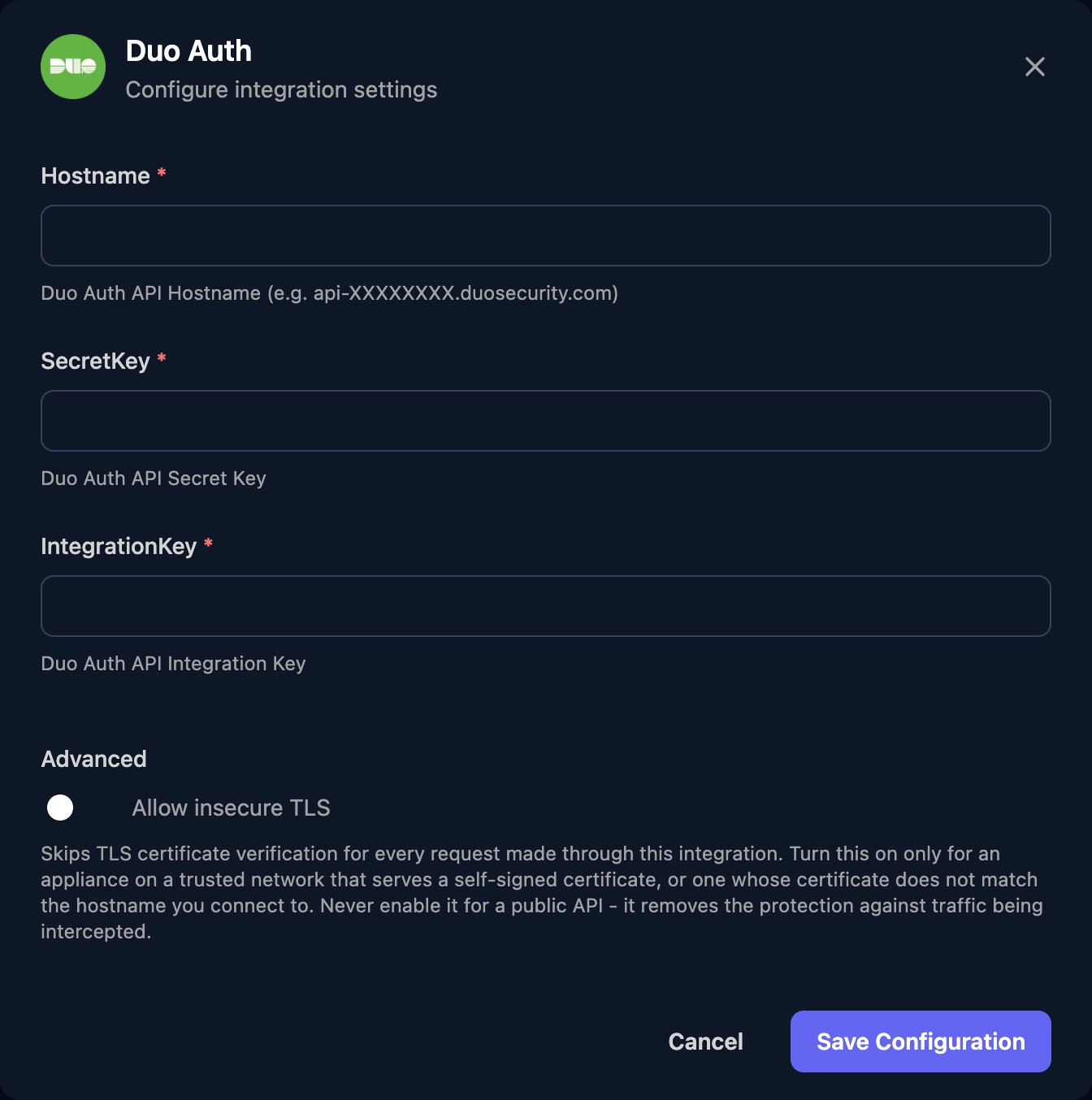
https:// plus the API hostname, with no trailing / or path (for example https://api-XXXXXXXX.duosecurity.com), add the SecretKey and IntegrationKey, then click Save Configuration.Troubleshooting
401 errors
401 errors
40102 means IntegrationKey is wrong or from a different account to Hostname. 40103 means SecretKey is wrong (perhaps reset in Duo) or Hostname has a trailing
/ or path.403 errors (40301)
403 errors (40301)
The keys come from an Admin API application. Duo Auth needs an Auth API application.
Users get a deny response
Users get a deny response
Check the user is included in the application’s User access, and the policies that apply to it.
no Duo Auth integration is configured for this client
no Duo Auth integration is configured for this client
Configure Duo Auth for that client on the Per-Client Configuration card.
429 errors
429 errors
If a workflow polls for an authentication result, leave a delay between checks.