

admin unless renamed) signing in without a one-time code, and a public IP address or hostname for the firewall’s WAN interface.
Set up the firewall
Repeat on each client’s firewall.1
Turn on the SonicOS API
In Device | Settings > Administration, open Audit / SonicOS API (SonicOS API in 7.3). Enable the SonicOS API and RFC-2617 HTTP Basic Access authentication, then click Accept. See SonicWall’s SonicOS API guide.
2
Allow HTTPS management on the WAN
In Network | System > Interfaces, click Configure on the WAN interface, select HTTPS under Management and click OK.
3
Limit management to Triggr
Create a WAN address group of Triggr’s IP addresses, plus your own if you manage the firewall over the internet, and set it as the Source of each WAN to WAN management rule in Policy | Rules and Policies > Access Rules. See SonicWall’s guide to restricting management access.
4
Check the port and certificate
In Device | Settings > Administration > Management, note the HTTPS Port if it isn’t
443. The firewall uses a self-signed certificate unless you import one from a public certificate authority.Connect it in Triggr
1
Open the client's configuration
Go to Integrations > SonicWall and click Configure on the client’s row on the Per-Client Configuration card, or on the Base Configuration card for your own firewall.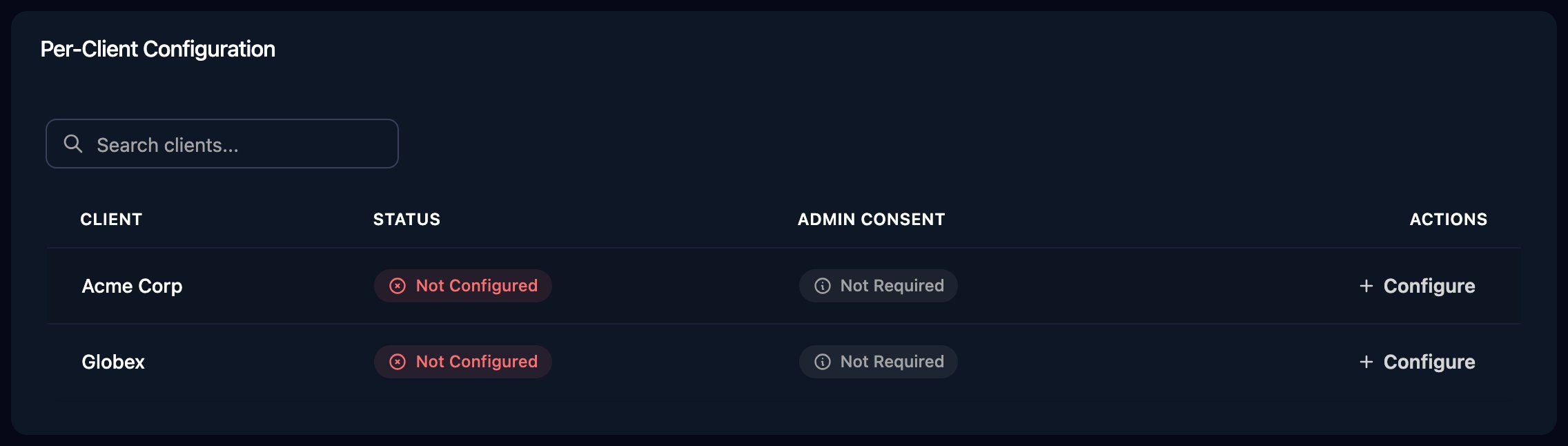
2
Enter the firewall's address and login
Enter the Appliance URL with 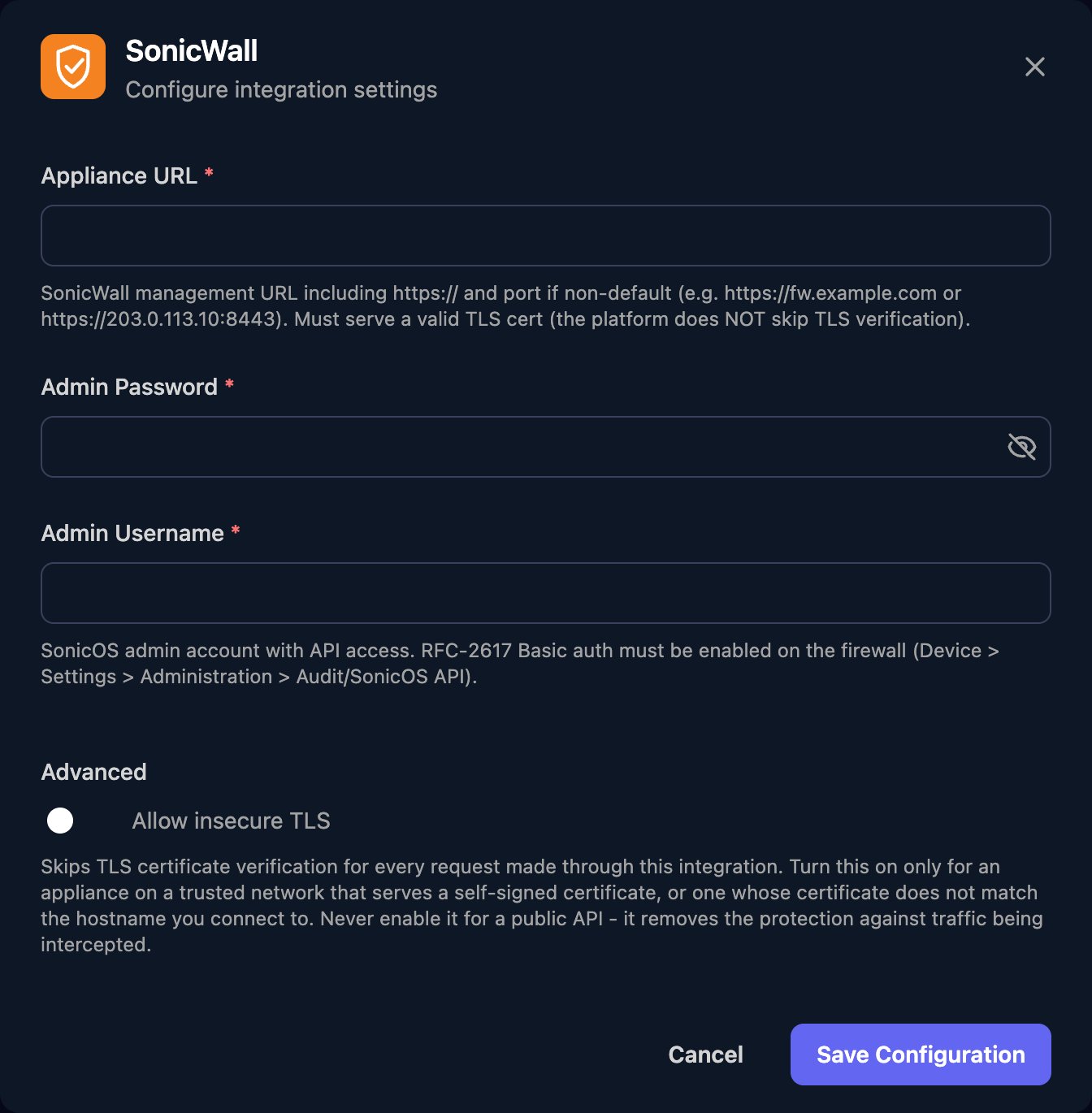
https://, the port if it isn’t 443 and no path, such as https://fw.example.com, then the Admin Username and Admin Password. Turn on Allow insecure TLS if the firewall uses its self-signed certificate, and click Save Configuration.Troubleshooting
no SonicWall integration is configured for this client
no SonicWall integration is configured for this client
Configure the client’s firewall on the Per-Client Configuration card.
Connection fails or times out
Connection fails or times out
Check the Appliance URL and port, that HTTPS management is on for the WAN, and that the management rules allow Triggr’s IP addresses.
Certificate errors
Certificate errors
Turn on Allow insecure TLS, or install a public certificate that matches the hostname.
401 or 403 errors
401 or 403 errors
401: check the username, password and RFC-2617 HTTP Basic Access authentication. 403: the SonicOS API is turned off.
503 errors
503 errors
The firewall has reached its maximum number of sessions, usually because another API client or workflow is still signed in. Wait for it to end, then retry.
Changes don't take effect
Changes don't take effect
Run Commit Pending before Logout, make sure no one else is changing the firewall, and use the built-in administrator.